Introduction
Stocks represent part ownership in a company. Bonds work differently. A bond is more like a loan that you give to a government or a company.
The borrower uses your money for an agreed period of time. In return, they usually promise to pay interest and return the original amount at a future date. This can sound more predictable than a stock, but bonds still have risks.
How does a bond work?
Imagine that a government wants to build a new railway or a company wants to expand its business. Instead of borrowing from one bank, it can borrow from many investors by issuing bonds.
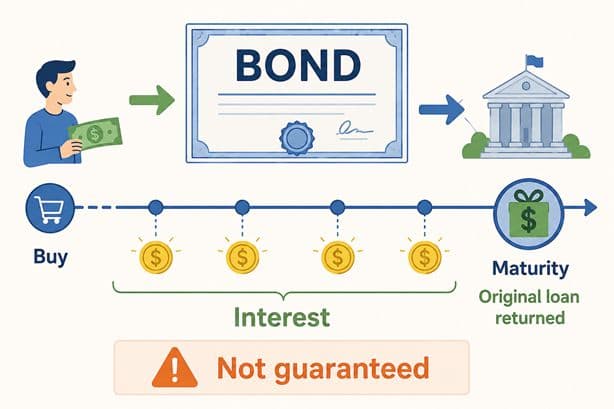
When you buy a bond, you lend money to the issuer. The issuer is the government or company borrowing the money. The issuer normally agrees to:
- pay interest at regular times;
- return the original loan on a set date, called the maturity date.
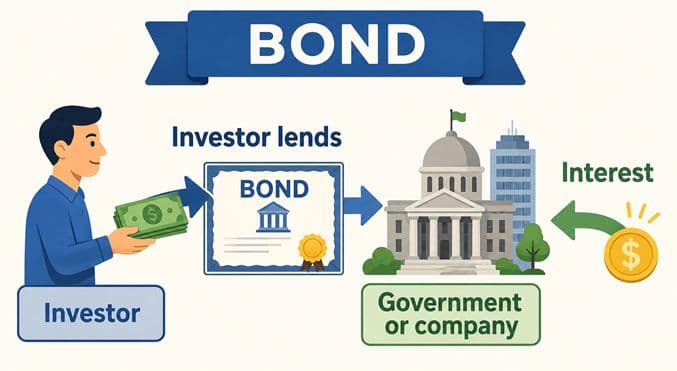
The interest payment is sometimes called a coupon. The coupon is often a fixed amount, but the exact terms depend on the bond. A bond can be held until maturity or sold earlier through a market.
A small example
Imagine you lend €1,000 through a bond that pays 3% interest each year and matures in five years. If the issuer keeps its promise, you may receive €30 in interest each year and your €1,000 back at maturity.
This is only an example. Actual bond payments, prices, taxes, and fees vary. The issuer may also fail to make the promised payments.
Why do people include bonds in a portfolio?
Bonds can provide regular income and may move differently from stocks. Because of this, some investors use them to make a portfolio less dependent on company share prices.
The balance between stocks, bonds, cash, and other assets depends on your goal, your time frame, and how comfortable you are with price changes. Bonds are not automatically the right choice for every situation.
What are the risks?
There are a few important risks to understand:
- Issuer risk: the company or government may not be able to pay the interest or return the loan.
- Interest-rate risk: when new bonds offer higher interest, an older bond may become less attractive and its market price can fall.
- Inflation risk: your payments may buy less in the future if prices rise faster than the bond’s return.
- Currency risk: a bond in another currency can be affected by exchange-rate changes.
Bond funds and bond ETFs can contain many bonds. They can make diversification easier, but their value can still move every day. They also usually do not have one single maturity date for the whole fund.
A step to take:
Before buying a bond or bond fund, check who is borrowing the money, how long the arrangement lasts, what interest is offered, and what costs apply.
Final Thoughts
A bond is a loan made by an investor to a government or company. It can provide interest and add balance to a portfolio, but repayment is not risk-free. Knowing who the borrower is and how the bond works can help you make a more informed decision.
Discuss on: