Introduction
A currency is the money used by a country or group of countries. Examples include the euro, the US dollar, the British pound, and the Japanese yen. You may see currencies in a portfolio when an investment is held in a different currency from the one you use at home.
The important idea is that one currency is always compared with another. That comparison is called an exchange rate.
How do currencies work?
Imagine you are travelling from a country that uses euros to a country that uses US dollars. You exchange one type of money for another, and the amount you receive depends on the current exchange rate.
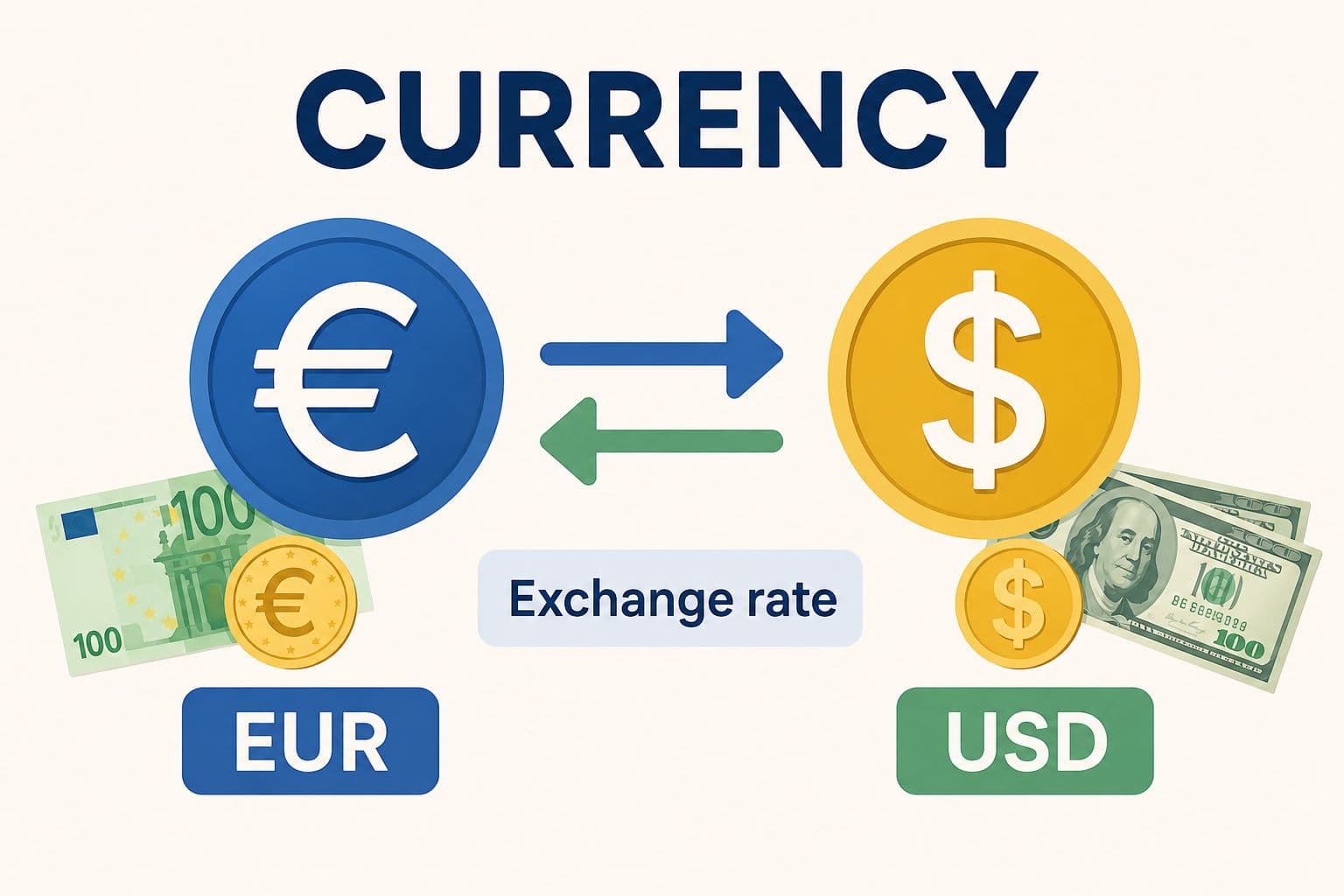
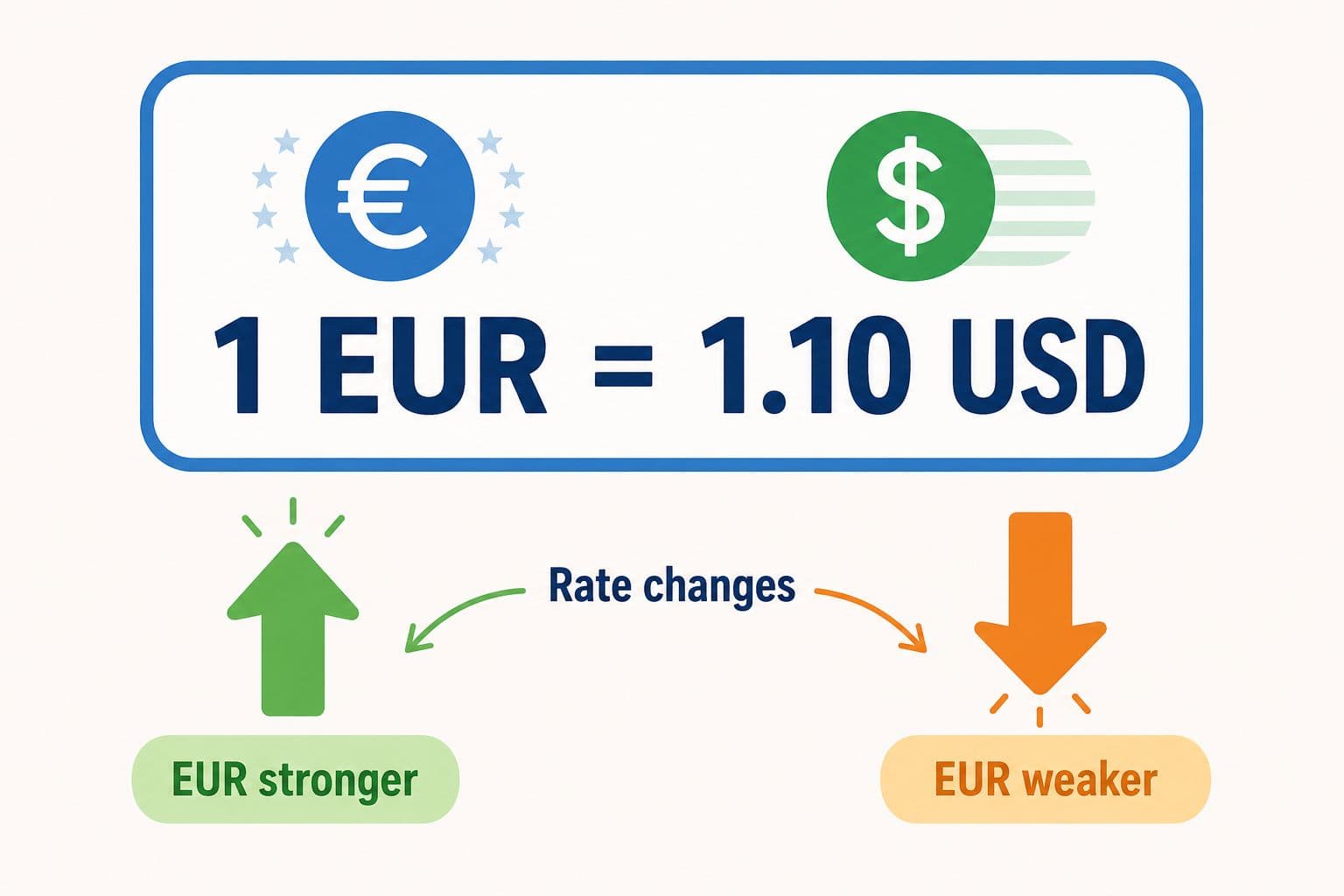
Currency trading also works in pairs. A pair such as EUR/USD compares the value of one euro with the value of the US dollar. If the rate changes, one currency has become stronger or weaker compared with the other.
Why can a currency change in value?
Exchange rates can move because of interest rates, inflation, trade between countries, political events, and expectations about the economy. Buyers and sellers in the currency market also affect the price.
For example, if one euro changes from being worth $1.10 to $1.05, the euro has become less valuable against the dollar. The same change can be helpful or harmful depending on which currency you hold and which currency you need.
Currency and your investments
Currency changes can affect an investment even when the investment itself has not changed much. If you buy a US investment while thinking in euros, both the investment price and the EUR/USD exchange rate can affect the value you see in euros.
This is called currency risk. It is not automatically bad, but it is something to understand when an investment uses a different currency from your everyday money.
What are the risks?
Currencies can move quickly and are difficult to predict. A currency that gains value against one currency can lose value against another. Trading costs, leverage, and large market moves can increase losses.
Owning foreign currency can also create a mismatch with your goals. If you need euros to pay for something, a fall in the value of your foreign currency may leave you with less spending money than expected.
A step to take:
Before buying an investment in another currency, check which currency you will ultimately use and how an exchange-rate change could affect the result.
Final Thoughts
A currency is money whose value is measured against other currencies. Exchange rates move for many reasons, and those changes can affect both direct currency assets and foreign investments. Knowing the currency behind an investment is a useful beginner habit.
Discuss on: