Introduction
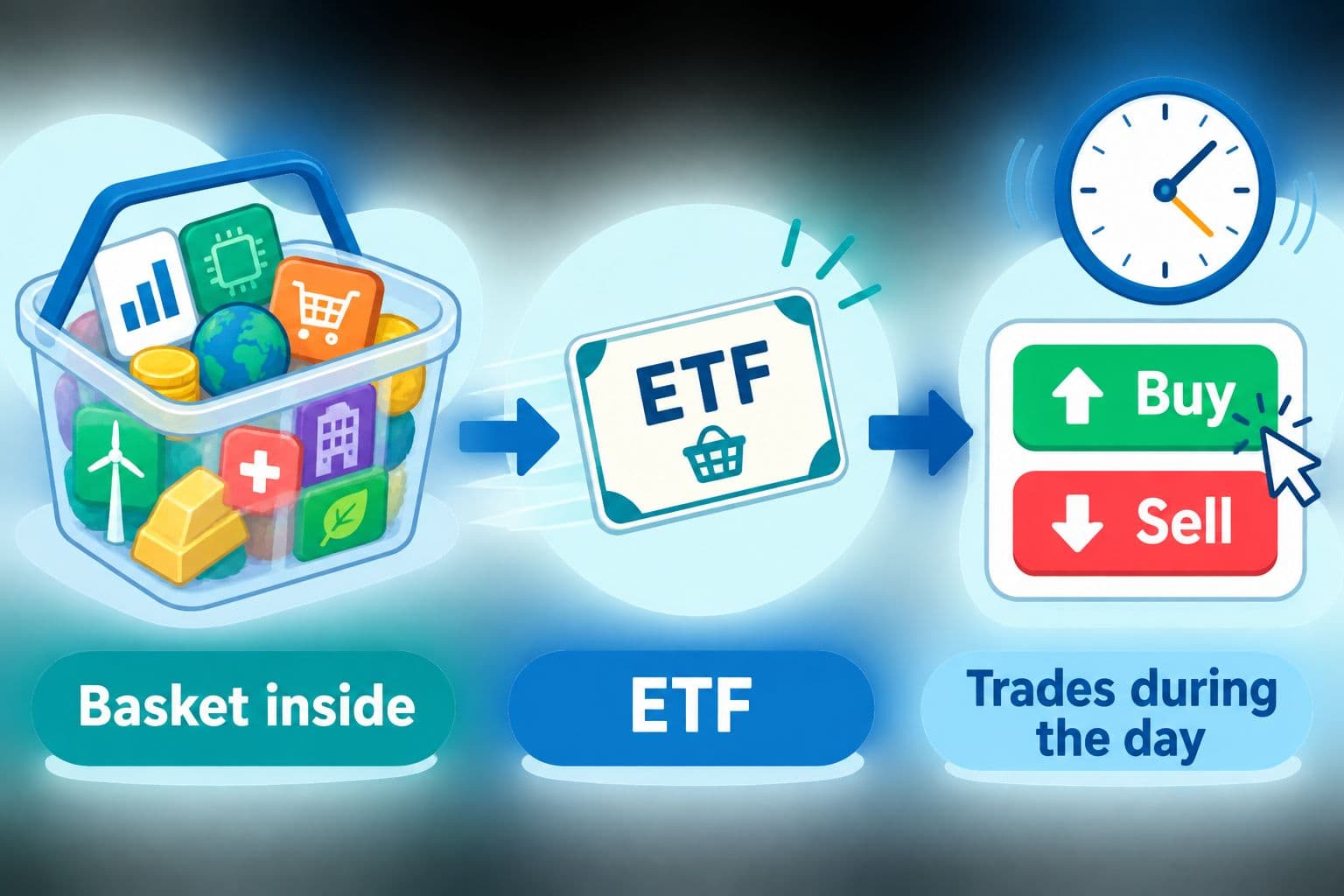
An ETF, or exchange-traded fund, is a collection of investments packaged into one product. The easiest way to picture it is as a basket: instead of choosing every item separately, you can buy one basket that already contains many different items.
ETFs are popular with beginner investors because they can make diversification more straightforward. However, an ETF is not automatically safe or guaranteed to grow. Let’s see what is inside the basket.
What is inside an ETF?
An ETF can hold stocks, bonds, cash-like investments, or a mixture of different assets. Some ETFs follow a market index, such as a group of large companies. Others focus on one industry, region, theme, or type of bond.
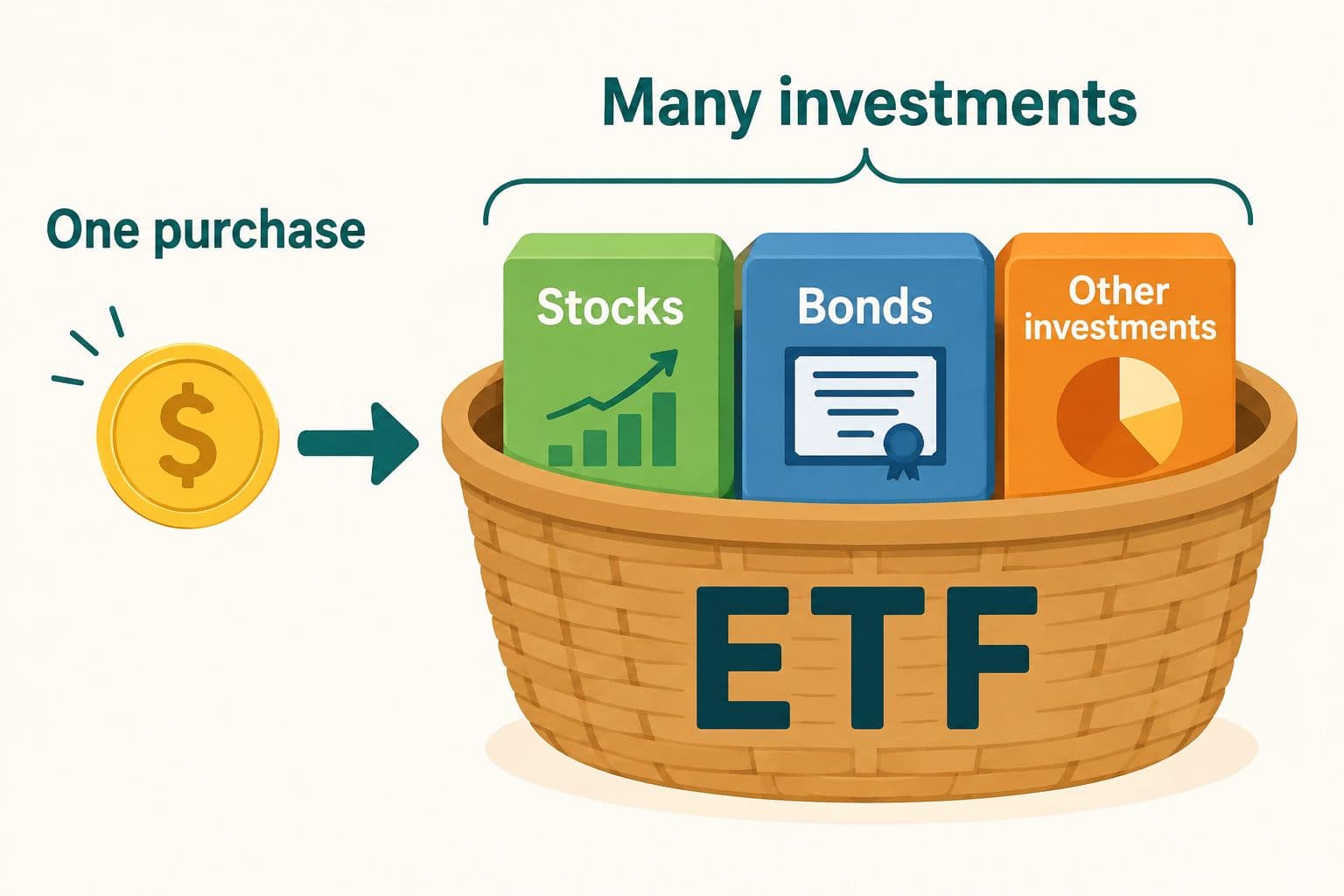
When you buy one share of an ETF, your money is spread across the investments held by that fund. You do not usually choose each asset yourself. The fund follows its own rules and updates its assets when needed.
For example, one ETF may hold shares in hundreds of companies from different countries. If one company has a bad year, it may have less effect on the whole ETF than it would have on a portfolio invested only in that company.
Why is it called exchange-traded?
Most ETFs can be bought and sold on a stock exchange during the trading day, just like an individual stock. You buy a share of the fund through a broker, and that share gives you a small interest in the whole basket.
This makes an ETF different from a simple savings account. Its price can move up and down while the exchange is open, depending on the value of the investments inside it and what buyers and sellers are willing to pay.
What are the benefits?
ETFs can be useful because they may offer:
- Diversification: one purchase can give you access to many investments.
- Convenience: the fund handles the process of following its investment rules.
- Choice: there are ETFs for different regions, industries, asset types, and goals.
- Visibility: the fund usually publishes information about what it holds.
Many ETFs also have lower ongoing costs than some actively managed funds. Still, costs differ from one ETF to another, so it is worth checking instead of assuming.
What are the risks?
An ETF can lose value because the investments inside it can lose value. A broad stock ETF can fall when stock markets fall. A focused technology ETF can be affected by one industry. A bond ETF can change value when interest rates move.
You should also look at the fund’s fee, which is the amount charged for running it. Other costs can include broker fees, taxes, and the difference between the buying and selling price. These details may seem small, but they can matter over a long period.
What should a beginner check?
Before choosing an ETF, take a moment to look at:
- What does the ETF invest in?
- Is it broad or focused on one area?
- What are the ongoing fees?
- What currency and country rules apply?
- Does it fit your goal and the amount of risk you can accept?
A step to take:
Read the ETF’s short factsheet. Find its main assets, its fee, and the type of market it follows before you decide whether it belongs in your portfolio.
Final Thoughts
An ETF is a basket of investments that can be bought and sold as one item. It can make diversification easier, but the basket can still go down in value. Understanding what is inside it is the best place to start.
Discuss on: