Introduction
A mutual fund pools money from many investors and uses it to buy a group of investments. The group might contain stocks, bonds, money-market investments, or a mixture of assets.
Instead of choosing every investment yourself, you buy units of the fund. The fund’s result depends on the investments it holds and the costs it charges.
How does a mutual fund work?
Investors put money into the fund, and a professional manager follows the fund’s strategy. The manager may choose investments, keep the portfolio close to an index, or adjust the assets according to the fund’s rules.
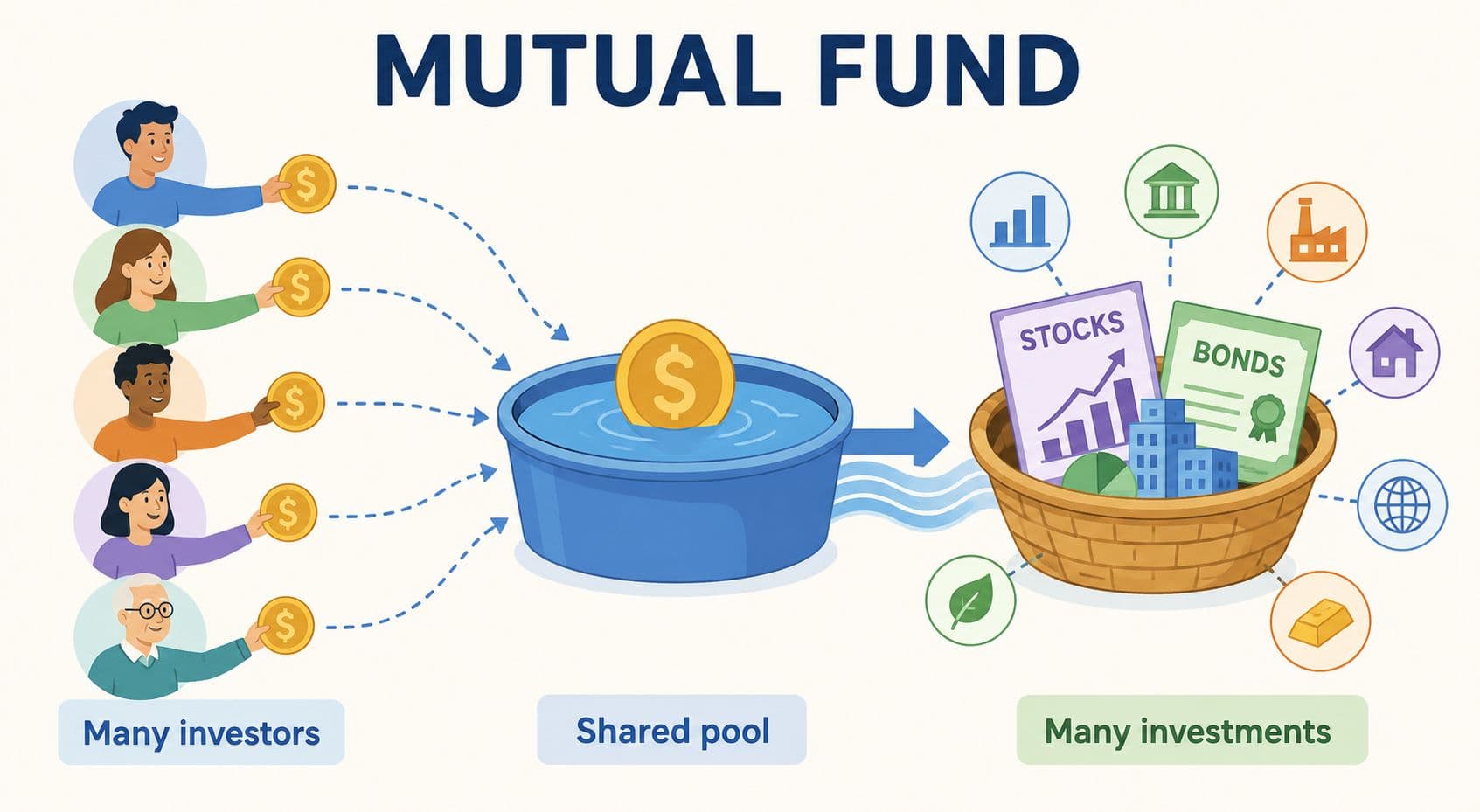
Your units represent a share of the fund. If the investments inside the fund rise in value, your units may rise too. If those investments fall, your units can lose value.
How is the price calculated?
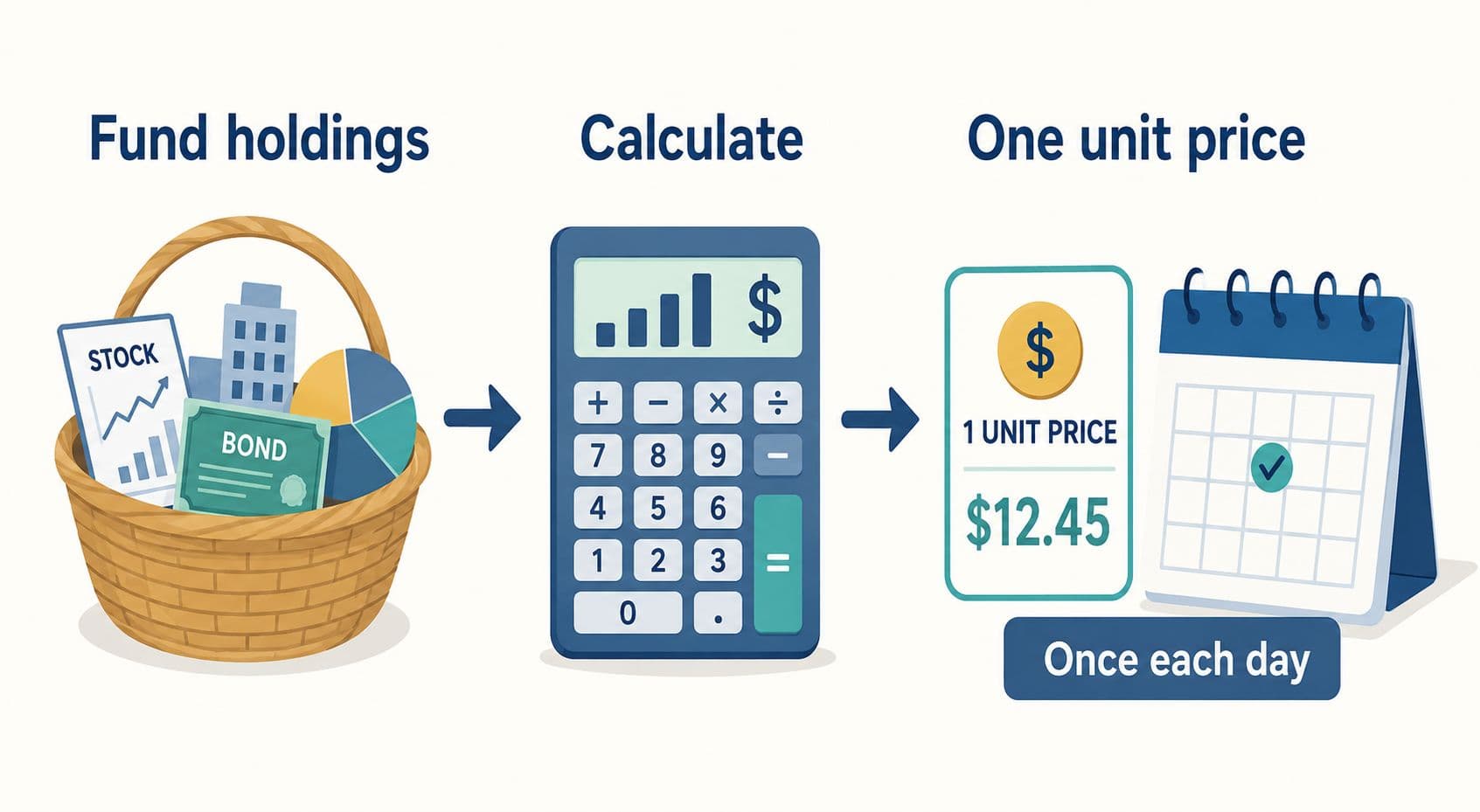
The fund calculates a value for all of its assets, subtracts costs, and divides the result between the units investors own. This value is often called the net asset value, or NAV.
Many mutual funds are bought or sold using one price calculated once per business day. This differs from an ETF, whose price normally changes throughout the trading day on an exchange.
What are the benefits?
Mutual funds can make diversification easier because one fund may hold many investments. They can also provide professional management and a clear strategy for people who do not want to choose individual investments.
The fund’s convenience comes with costs. Check the ongoing management fee, any entry or exit charge, and whether the fund has performance fees or other expenses.
What are the risks?
A mutual fund can lose value when its investments lose value. A fund can also be concentrated in one country, industry, or type of asset. A manager’s decisions may not produce the result investors hoped for.
Some funds can take longer to sell or may have rules about when money can be withdrawn. The fund’s name alone does not tell you how risky it is, so read its assets and strategy.
A step to take:
Before choosing a mutual fund, check its assets, strategy, price timing, fees, and how easily you can withdraw your money.
Final Thoughts
A mutual fund is a shared pool that invests money for many people. It can offer diversification and professional management, but the value can fall and fees reduce returns. Understanding the fund’s strategy is more useful than relying on its name.
Discuss on: