Introduction
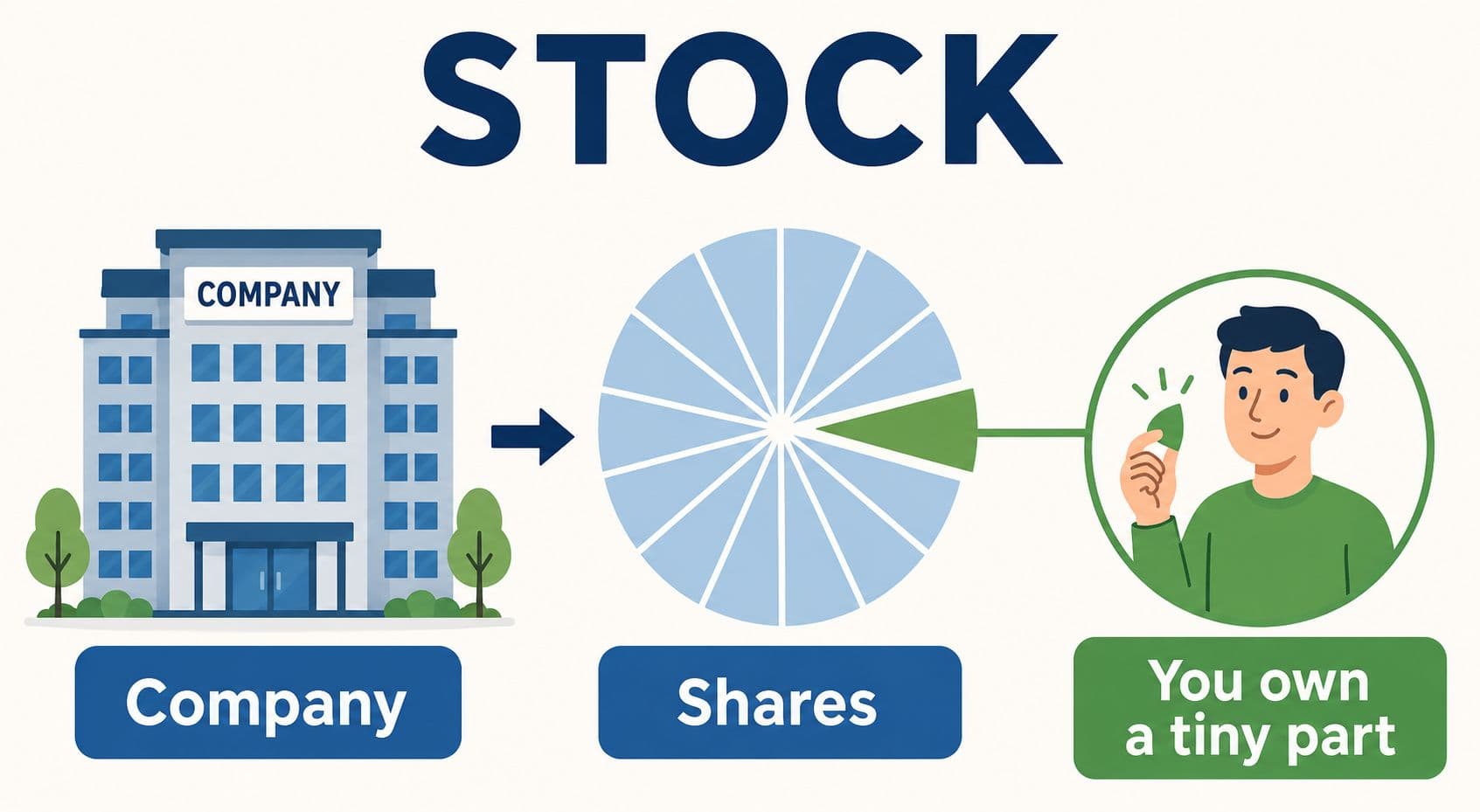
Stocks are one of the first words you will hear when you start learning about investing. They can sound complicated at first, but the main idea is quite simple: a stock is a small piece of ownership in a company.
You may not be able to walk into the company’s office or make decisions about its daily work. However, owning a stock means you own a very small part of that business. Let’s take a closer look at how it works.
What does owning a stock mean?
Imagine that a company is a large pie. The company can divide this pie into many small pieces called shares. Each share represents a small part of the company.
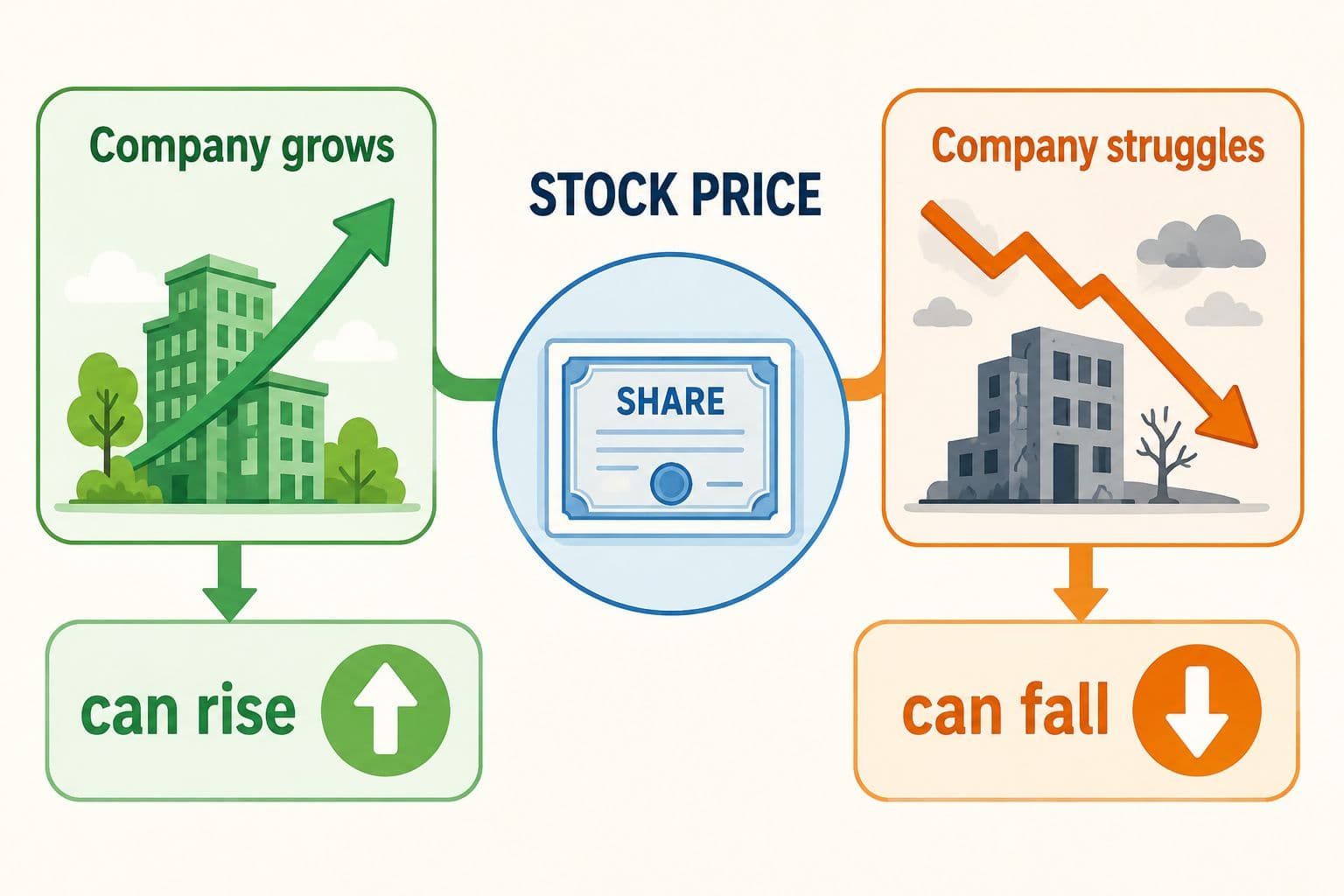
When you buy a stock, you usually buy one or more of these shares. The value of your shares can go up if the company grows and becomes more valuable. The value can also go down if the company struggles or if investors believe it may have a difficult future.
Stocks are normally bought and sold through an investment platform or broker. The price changes during the day because people are constantly buying and selling them. This is why the price you see today may be different tomorrow, or even a few minutes from now.
How can stocks make money?
There are two common ways a stock can provide a return:
- The share price grows. You buy a share at one price and later sell it at a higher price.
- The company pays a dividend. Some companies share part of their profits with shareholders. Not every company pays dividends, and a dividend is never guaranteed.
For example, imagine you buy a share for €20. If the company performs well and other investors are willing to pay €25 later, your share has increased in value by €5. You only turn that increase into money if you sell, and prices can also move in the opposite direction.
Why do people invest in stocks?
Stocks give investors a way to participate in the growth of businesses. Over long periods, successful companies may grow their sales, profits, and value. This is one reason stocks are often included in long-term portfolios.
It is important to remember that one company can have a very different experience from another. A new product, a change in customer habits, or a difficult year can affect one company much more than the wider economy.
What are the risks?
Stocks can lose value. A company can perform worse than expected, an industry can change, or the wider market can fall. In the worst case, a company can fail and its stock may become almost worthless.
This does not mean that stocks are always a bad choice. It means that putting all your money into one company can create a lot of risk. Owning different companies, industries, or asset types can help spread that risk. An ETF is one way people get exposure to many companies with one purchase.
A simple checklist for beginners
Before buying an individual stock, it can help to ask yourself:
- Do I understand what the company does?
- Am I investing for a long-term reason or reacting to a short-term story?
- Could I cope if the share price fell?
- Is this one stock only a small part of my overall portfolio?
A step to take:
Start by learning about one company you already know. Focus on how it makes money, what could help it grow, and what could make its future harder.
Final Thoughts
A stock is simply a small piece of a company. It can offer growth and sometimes income, but its value can change quickly and there are no guaranteed returns. A clear goal, a long-term view, and a diversified portfolio can make the idea easier to manage.
Discuss on: