Introduction
A market index is a number that tracks a selected group of investments. It works like a scorecard: it gives you a simple way to see how that group is doing instead of looking at every investment separately.
An index is usually not a company or an investment account. It is a set of rules for choosing and measuring its members.
How is an index built?
The index provider decides what belongs in the group and how much influence each member has. The rules might focus on a country, an industry, company size, or another feature.
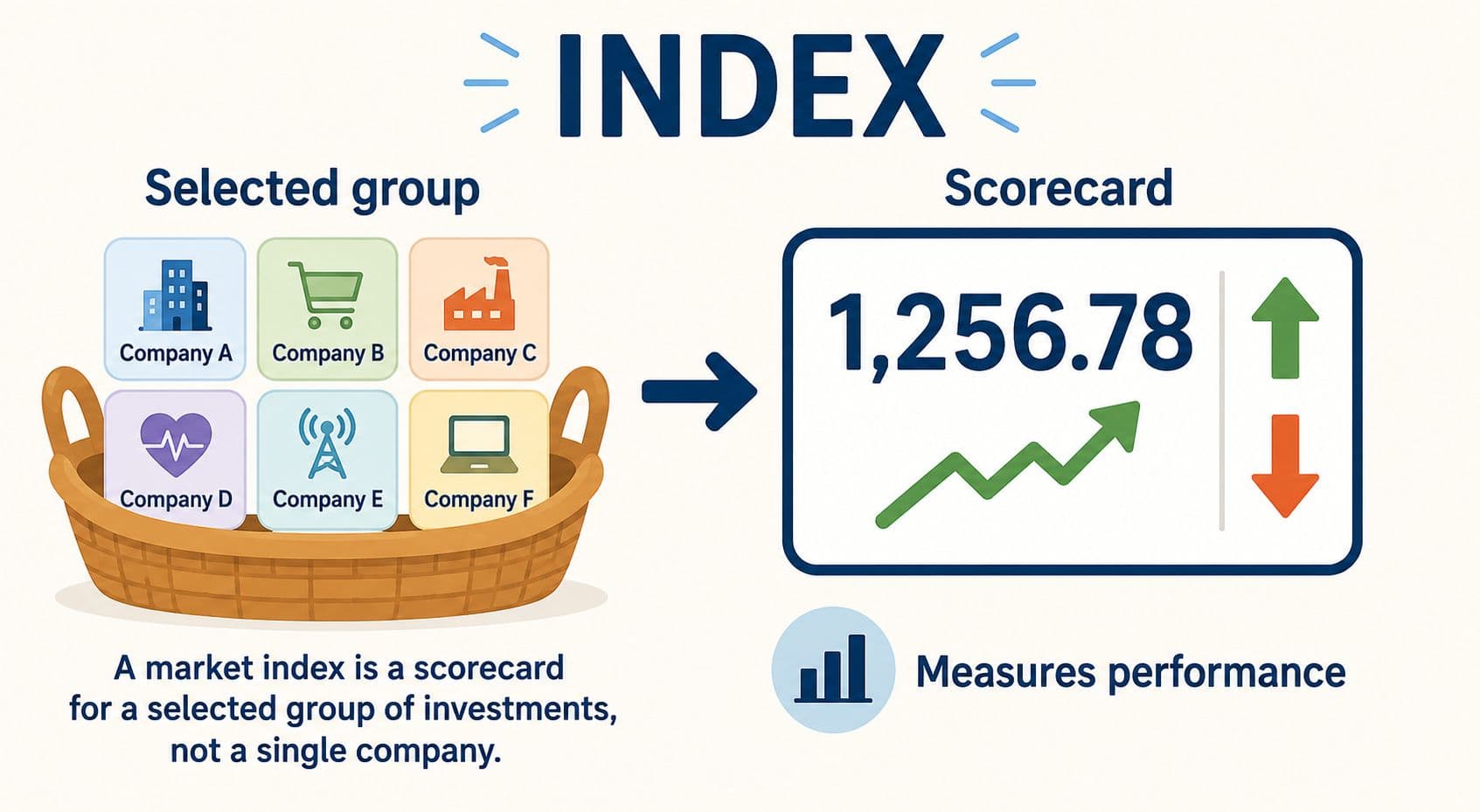
An index can rise when the group is worth more overall and fall when the group loses value. The number is useful for comparison, but it does not tell you exactly what every investment in the group did.
Can you buy an index?
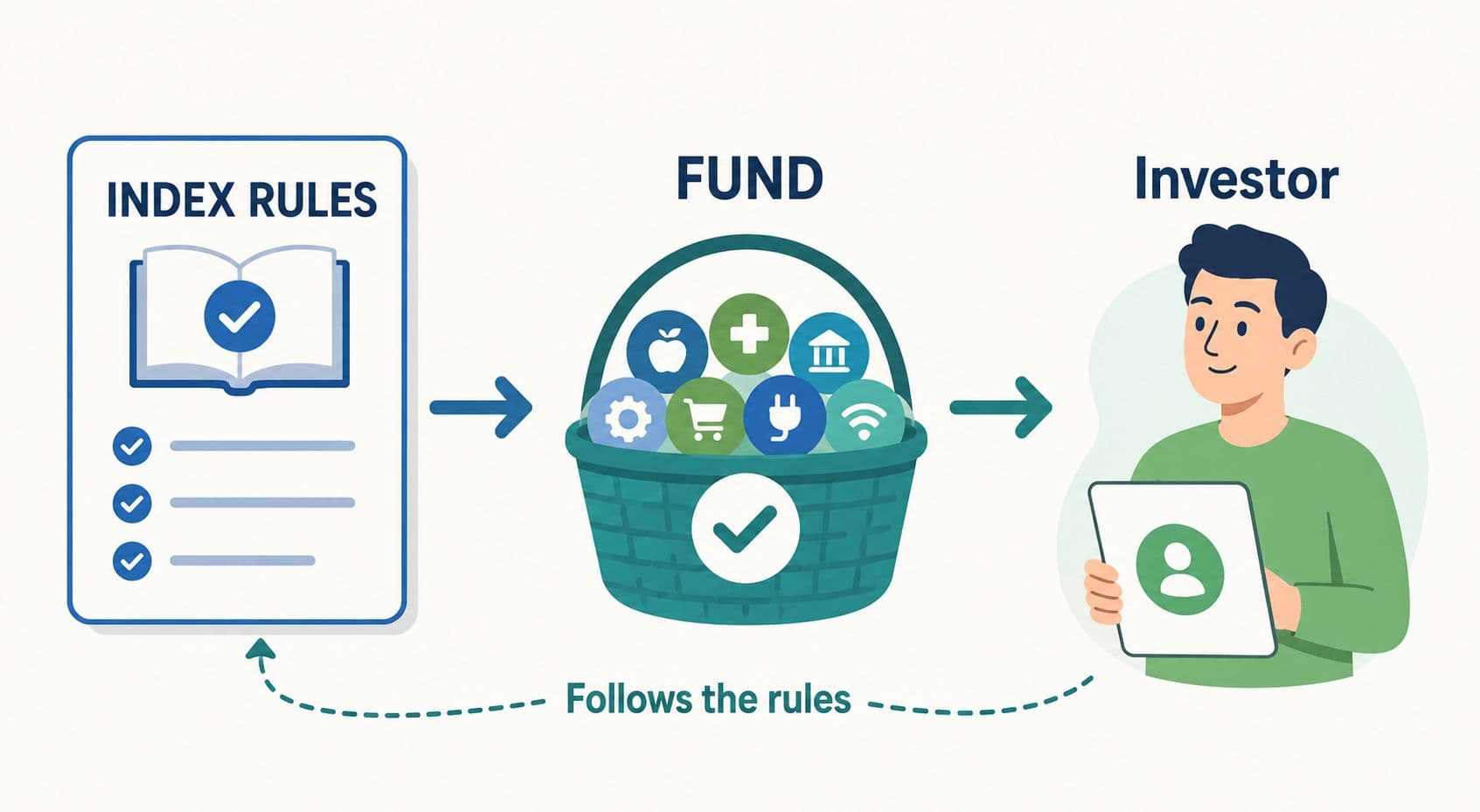
You normally cannot buy an index itself because it is a measurement. You can buy an index fund or an index ETF that follows the index’s rules.
The fund tries to hold the same investments, or a close version of them, so that its result is similar to the index. Fees, taxes, and small tracking differences mean the fund will not match the index perfectly.
Why do people use index funds?
An index fund can give you access to many investments through one purchase. It may also be easier to understand than choosing each company separately, especially when the index covers a broad market.
Not every index is broad. An index focused on one industry or country can still be concentrated and can fall sharply when that area struggles.
What are the risks?
An index can fall when the investments it measures fall. A fund that follows it can also have fees, tracking differences, and trading costs. Past index performance does not guarantee future results.
A step to take:
Before choosing an index fund, check which group it follows, how concentrated that group is, what it costs, and whether it fits your goal.
Final Thoughts
An index is a scorecard for a chosen group of investments. You cannot usually buy the scorecard itself, but an index fund or ETF can follow its rules. Look at what the index contains before assuming it represents the whole market.
Discuss on: