Introduction
When people talk about cash as an asset, they usually mean money that is kept available instead of being invested in stocks, bonds, or crypto. It can be money in a bank account or another easy-to-access place.
Cash may not feel as exciting as an investment that can grow. However, having some money available can give you flexibility and a sense of stability. Let’s look at the role it can play in a portfolio.
Why do investors keep cash?
Cash can be useful when you need money soon. It can help cover an upcoming payment, give you a buffer for an unexpected expense, or let you wait before making a new investment decision.
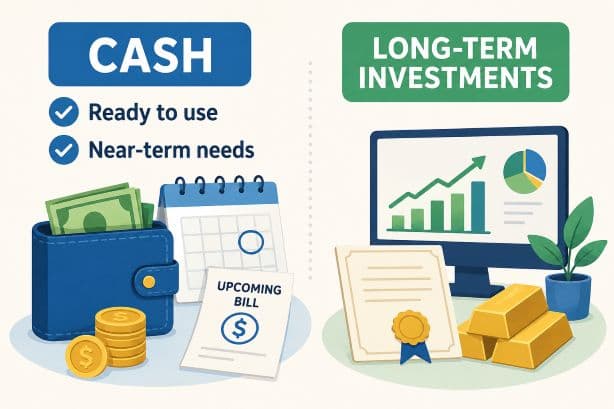
Unlike a stock or a crypto asset, cash in your account normally does not change value every minute because of the market. You know roughly how much money is available, which can make planning easier.
This does not mean cash has no risks. If prices rise over time, the same amount of money may buy fewer things in the future. This loss of buying power is called inflation.
Cash is not the same as an emergency fund
An emergency fund is money set aside for unexpected life events, such as a repair, a medical bill, or a period without income. It is usually kept separate from money meant for long-term investing.
Cash inside a portfolio can have a different job. It may be waiting for a planned contribution, a rebalance, or a goal that is getting closer. The right amount depends on your personal situation and time frame.
How can cash make a portfolio feel steadier?
If the value of stocks or other assets falls, cash does not usually fall in the same way. This can make the total portfolio move less sharply. It also means that you may not need to sell a long-term investment to pay for a near-term need.
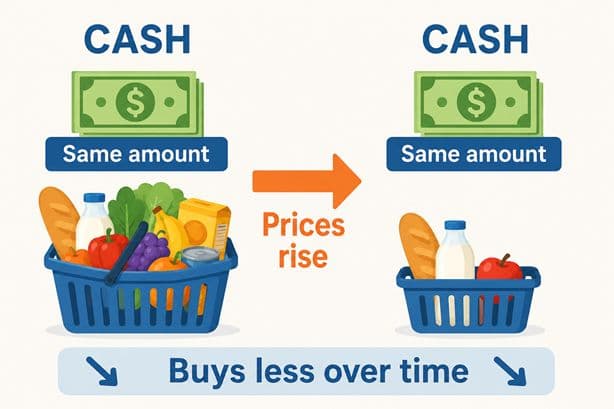
There is a trade-off, though. Money kept in cash is not taking part in the possible growth of the market. Over a long period, keeping too much cash can make it harder for your investments to keep up with inflation.
What should you think about?
Before deciding how much cash to keep, consider:
- When will I need this money?
- Do I already have a separate emergency fund?
- Is the money protected under the rules that apply to my bank or provider?
- Am I keeping cash because it fits my plan, or because I am worried about a short-term market move?
Interest on a bank account can help offset some inflation, but rates and account terms can change. Cash-like products can also have their own risks and costs, so it is worth checking the details.
A step to take:
Give every part of your money a job. Keep near-term spending and emergency savings easy to reach, and invest only money that can stay invested for the time your goal requires.
Final Thoughts
Cash is the part of a portfolio that stays ready to use. It can add flexibility and stability, but it may lose buying power over time and it does not provide the same growth opportunity as investments. A clear time frame can help you decide how much cash makes sense for you.
Discuss on: