Introduction
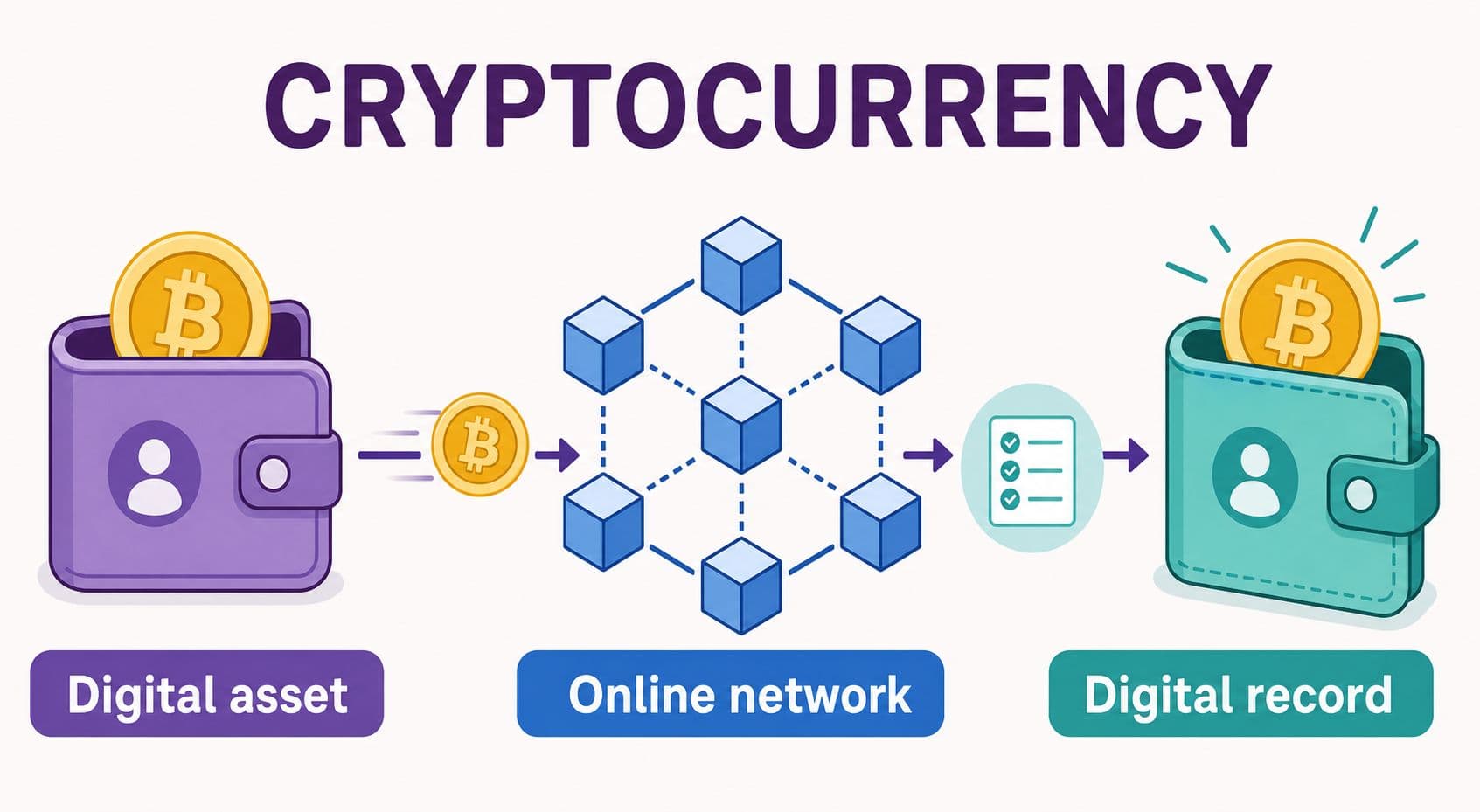
Crypto is short for cryptocurrency. It describes digital assets that are created, recorded, and transferred using online computer networks.
Unlike cash in a bank account, crypto is not normally controlled by one traditional bank. Many crypto networks use a shared digital record, often called a blockchain, to keep track of transactions. You do not need to understand every technical detail to understand the main idea: crypto ownership is recorded digitally.
What do you own when you buy crypto?
When you buy a crypto asset, you do not usually own part of a company in the way you might with a stock. You are also not lending money to a company or government in the way you might with a bond.
You own a digital balance that can be transferred or held through a crypto service or wallet. Different crypto projects can have different purposes, rules, and networks. Some are used for payments, some for online applications, and some are mainly traded because people expect their price to change.
The price of a crypto asset depends on what buyers and sellers are willing to pay. Prices can move very quickly, sometimes by a large amount in a single day. A popular story or a change in the technology can affect the price, but there is no simple way to predict what will happen next.
What is a crypto wallet?
A crypto wallet is a tool that helps you access and manage your digital assets. It may be an app, a hardware device, or a service provided by an exchange.
Wallets use credentials such as a private key or recovery phrase. These details act like proof that you are allowed to move the assets. If someone else gets access to them, they may be able to take your crypto. If you lose them, it may be impossible to recover your assets.
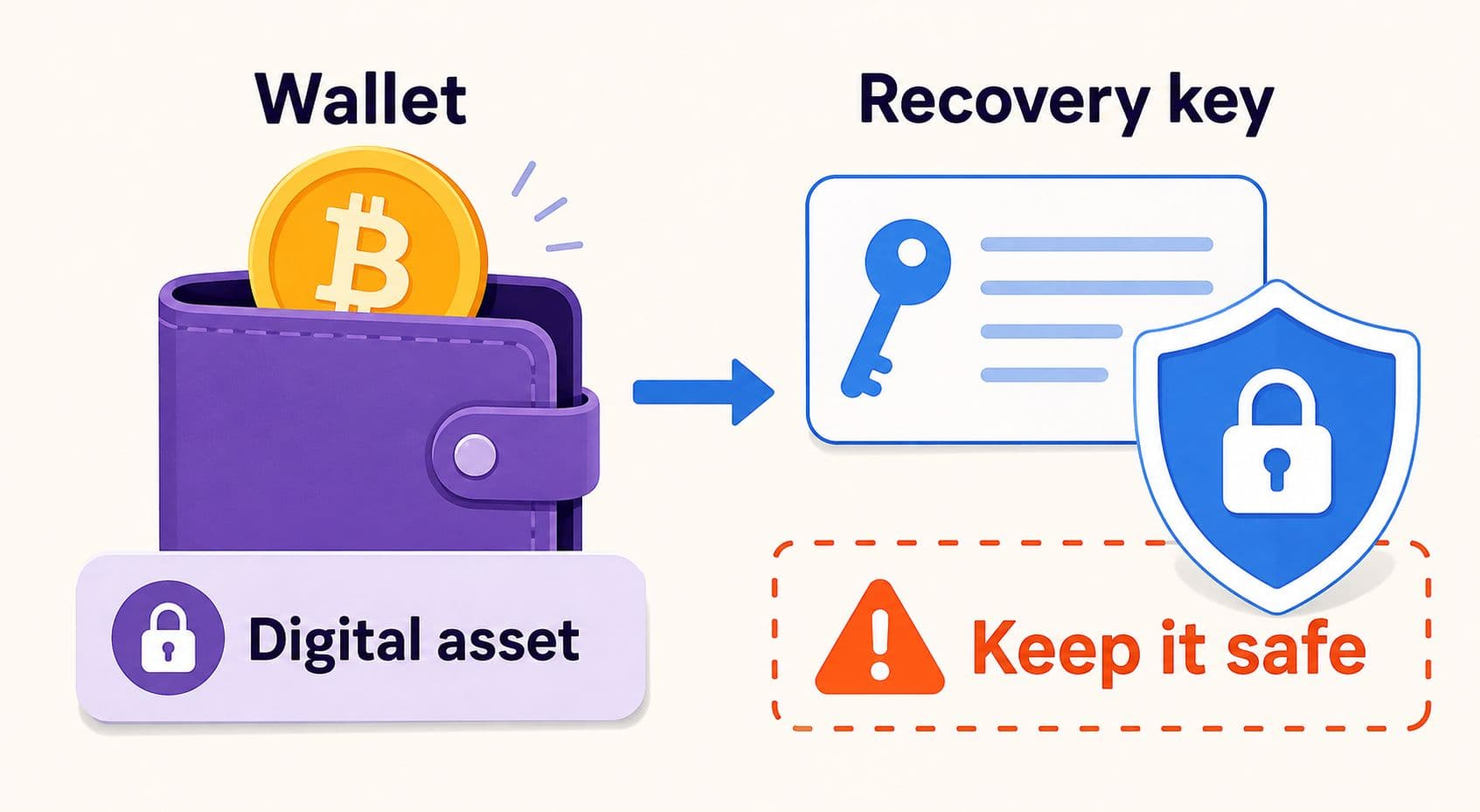
This is one of the biggest differences between crypto and a normal bank account. A bank may be able to help you reset access to an account, while a crypto wallet may not have the same recovery options.
What are the risks?
Crypto can be much more volatile than many traditional investments. You can lose some or all of the money you put in. Other risks include:
- Security risk: a hacked account, scam, or lost recovery phrase can lead to permanent loss.
- Platform risk: a crypto exchange or service can have technical, financial, or legal problems.
- Project risk: a project may not deliver what it promised or may stop being used.
- Rules and tax risk: laws and tax treatment can differ by country and can change over time.
- Fee risk: moving assets between networks or services may involve fees.
Because of these risks, crypto should not be treated as a guaranteed savings account or as a quick way to become wealthy. It is also wise to be careful with anyone promising certain returns.
A step to take:
Learn how the specific asset works, how you would keep it secure, and how much you could afford to lose before you consider buying it.
Final Thoughts
Crypto is a digital asset that uses online networks to record ownership and transfers. It can be interesting to learn about, but prices and security risks can be severe. Take your time, protect your access details, and never invest money that you need for everyday life or an important goal.
Discuss on: